A blog about my culinary experiences in Paris and around the world.

Thursday, January 6, 2011

Last Restaurant Service...

I can't believe it's the last restaurant service of our school year. We've done 7 in total! All of them were a lot of work, hectic, but a fun learning experience - only that it's about 30 % of the reality of the real working kitchen - something we will all encounter in the coming months!


A great ending with a nice menu....enjoy the photos!


Amuse Bouche by Rosella and Dionysis : Carré de duos de poivrons
(Duo of bell peppers, pickled quail egg topped with trout eggs)


Yellow and red peppers, agar jelly

Trout eggs
Final presentation:


Hors d'oeuvres by Yiyu, Natalia, Joppe and Matan: Le tout chataigne en multiple d'épices
(Chestnut three ways with its spices)

Marbled chestnut

Final presentation


Poisson by Isabel, Roberto and Me: La mer en écume du fruit de sa passion
(Seabass with its fruit of passion)


Marking the bar (seabass)
Final presentation


Viande by Carolina, Maniko and Sinan: Médaillon de selle d'agneau, Shitake et superposé de légumes
(Lamb medallion, layered vegetables and Aubergine crisp)

Ail confit

Layered vegetables

Final presentation


Super sad of having been done with restaurant service, but now onto more professional work!
Hope I survive! :)


Wednesday, January 5, 2011

Petits Fours, Babas, Savarins et Marignans

The last pastry class was all about Petits Fours, Babas, Savarins and Marignans.


A petit four is a small confection generally eaten at the end of a meal (e.g. with coffee) or served as part of dessert. The name is from the French petit four, meaning "small oven".
There are two different categories of petits fours. Petits fours secs (sec meaning "dry") include a variety of small desserts, such as special dainty biscuits (also buttery biscuits), baked meringues, and macaroons. Petits fours glacés (glacé meaning "iced") are iced or decorated in some way, such as tiny cakes covered in fondant or glacé icing, small éclairs, and tartlets. 


Below: Baba au rhum, Savarins and Marignans...

A baba au rhum is a small yeast cake soaked in liquor (rum), and sometimes filled with whipped cream or pastry cream. 
Savarin is a rich yeast cake is soaked with rum-flavored syrup and filled with Pastry Cream, Creme Chantilly or fresh fruit.
Finally, Marignan is a baked savarin soaked in a liqueur-flavoured syrup, covered in apricot jam, and a layer of meringue.

A typical day for Chef Thierry Jamard (our Pastry Chef during our culinary studies at Ferrandi). Thank you!


Sunday, January 2, 2011

How can you leave Hong Kong without having Dim Sum 點心?


Dim sum 點心 is a Cantonese term that involves small individual portions of food, usually served in a small steamer basket or on a small plate. Going for dim sum is usually known in Cantonese as going to "drink tea" (yum cha, 飲茶). The word yum cha, is also the name of Adeline Grattard's restaurant in Paris, which is fitting for her contemporary Cantonese cuisine. 

The drinking of tea is as important to dim sum as the food. A popular tea which is said to aid in digestion is bolay (puli), which is a strong, fermented tea.  Oolong (wu lung) and Jasmine tea can be served as well. It is customary to pour tea for others during dim sum before filling one's own cup. A custom unique to the Cantonese is to thank the person pouring the tea by tapping the bent index finger if you are single, or by tapping both the index and middle finger if you are married, which symbolizes 'bowing' to them.

Traditional dim sum is eaten for breakfast, brunch or afternoon tea, as part of the yum cha experience. My grandmother for example, comes to her favorite dim sum restaurant as early as 7.30 am! Dim Sum includes various types of steamed buns such as char siu baau, dumplings and rice noodle rolls (cheong fun), which contain a range of ingredients, including beef, chicken, pork, prawns and vegetarian options or fried items. The serving sizes are usually small (compare to Spanish tapas size) and normally served as three or four pieces in one dish. It is customary to order family style, sharing dishes among all members of the dining party. Because of the small portions, people can try a wide variety of food - and we did!
Many dim sum restaurants also offer plates of steamed green vegetables, roasted meats, congee porridge and other soups. Dessert dim sum is also available and many places offer the customary egg tart. 
Dim sum dishes can be ordered from a menu or sometimes the food is wheeled around on a trolley by servers (I love the latter). 

I thought as my final lunch meal in Hong Kong before I jet off to Paris, why not have Dim Sum, something that represents Hong Kong cuisine at its best. For dim sum, I tend to stick to the very local venues, and coincidentally convened with my grandmother on a Sunday, where usually families get together to have dim sum anyways.

The restaurant we went to is called Foo Lum, and is located in Tsim Sha Tsui, Kowloon. Here's only a glimpse of what Dim Sum has to offer...

A view from the escalator


Braised chicken feet 鳳爪 Fung Zao: marinated in a black bean sauce and then steamed


腐皮捲 Fu Pei guen: Tofu skin roll with shrimp


Donut sticks wrapped in noodle (Za leung)


蝦 餃 (Har gau): steamed dumpling with whole or chopped-up shrimp filling and thin wheat starch skin


燒賣 siu mai: steamed dumplings with pork and prawns topped off with crab roe and mushroom.


 鹹水角 Haam Sui Gaau:  fried oval-shaped dumpling made with rice-flour and filled with pork and chopped vegetables. The rice-flour surrounding is sweet and sticky, while the inside is slightly salty


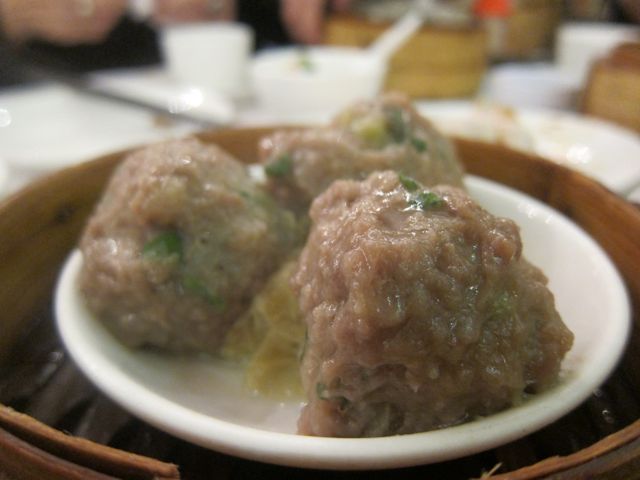
Steamed meatball (牛肉球): Finely-ground beef is shaped into balls and then steamed nd served on top of a thin bean-curd skin. My ultimate favorite!!!!


Lotus leaf rice (糯米雞 lou mai gai): Glutinous rice wrapped in a lotus leaf; contains egg yolk, dried scallop, mushroom, water chestnut and meat (usually pork and chicken) that are steamed with the rice.  


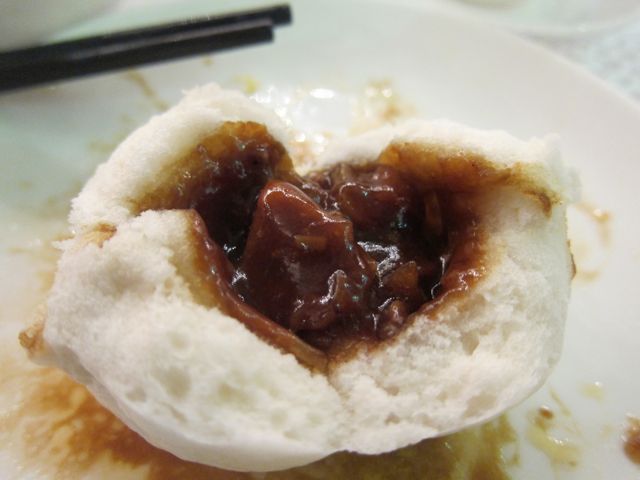
Char siu baau 叉燒包: steamed bun with a Cantonese barbecued pork filling


And the traditional stamp receipt at the end and...voila! In a local restaurant, aim to pay around 200 - 250$ HKD.


Hong Kong, I miss you!


Saturday, January 1, 2011

Sushi One 一壽司

For my last night in Hong Kong, before I jet off to cold Paris, I didn't want anything fancy, just good food; and I knew that knowing my lazy self, I wouldn't eat fish for a while, mostly just meat in Paris especially after coming back late nights from school and the upcoming internship- so why not some good Japanese food. Another reason why I chose Japanese is because I find it to be quite pricey in Paris for what you order therefore I wanted to get as much good sashimi as possible!


Sushi One  一壽司 has several branches in Hong Kong but I like to go to the one in Causeway Bay, out of convenience. It is a very popular Japanese restaurant that specializes, as its name suggests, in Sushi, Sashimi and other Japanese dishes. The menu is quite extensive so there are plenty of choices including maki, yakitori, tempura, etc.. The sashimi is always fresh, sweet and even melts in your mouth.


The design of the restaurant is modern, simple, yet nice. You can sit in the dining room or at the sushi bar. They have an aquarium that stretches throughout the restaurant, so the swimming fish in the tank are watching you eat fish, haha. 


The place gets packed during dinner so we tend to get there for 7 pm or else there's a huge queue. Prices for dishes vary on what you get (in terms of the color of the dish either grey, green, blue, yellow, etc...), but stays within the 100 - 250$ range (at the end of the meal) which is very reasonable especially for sashimi.

Some preview of the restaurant...

Salmon and Hamachi (yellowtail) sashimi


Salmon Sushi


Crab roe sushi


Crab and roe salad


Grilled sweet egg


Salmon belly sashimi 


Fried chicken softbone


It's not the BEST sashimi or sushi bar in Hong Kong, but it's a very good one, that has maintained its standards and I have always liked the food when I go as it is tasty and cheap at the same time; and not every restaurant can provide the best of both. 

Sushi One
G/F Chinachem Leighton Plaza, 29 Leighton Road, Causeway Bay
Tel: 3188 0083
Subway station: Causeway Bay


Tsui Wah 翠華餐廳

Happy New Year!!!! I hope you all had a wonderful countdown with family and friends and wishing you all a prosperous 2011! As always, the only thing I want to talk about is...food.


A trip to Hong Kong would not be complete without joining the locals (and I mean all locals - from celebrities, business tycoons and just your average Hong Kong-er) and ordering milk tea and a meal from an extensive menu from this 'institution', Tsui Wah 翠華. While there are many branches in town, the Central branch, open 24 hours, has become the place for breakfast, lunch, snack, dinner AND late night food after a long night out. There's always a crowd in this restaurant at every time of the day....ALWAYS.
The restaurant offers 3 levels of seating, so during a working day lunch hour, you may wait a bit but then up having a table with a local - normal proceedings at Tsui Wah and any local Chinese diner. 


Tsui Wah is one of Hong Kong's most well-loved char chan tengs 茶餐廳 (Chinese tea diner commonly found in Hong Kong). A note about Char chan tengs...


Char Chan Teng provide tea (usually weak tea) called "clear tea" (清茶 cing cha), to customers as soon as they are seated. It is also very common to use the heat to wash your utensils (this is will appear like an insult...) The name, literally "tea restaurant", serves to distinguish itself from Western restaurants that provide water to customers instead of tea. The "tea" in the name refers to the inexpensive black tea, not the traditional Chinese tea served in traditional dim sum restaurants and teahouses. 
Cha chaan teng serves a wide range of food. Both fast food and à-la-carte dishes are available. A big cha chaan teng often consists of three cooking places: a "water bar" (水吧) which makes drinks, toast/sandwiches and instant noodles, a "noodle stall", and a kitchen for producing rice plates and other more expensive dishes. 
Customers usually select their seats freely in a cha chaan teng, but in a crowded restaurant they may be given the choice of sharing a table with strangers. During peak hours, waiters in a char chan teng will seat their customers, "packing" as many customers into the restaurant as possible. In most char chan tengs, customers call out their orders to a waiter, who will jot down the prices of the ordered food 
Tsui Wah has branches all over Hong Kong, so you should have no problem finding it. This well established char chan teng is known to be open 24 hours, even during typhoons! The range of dishes served in this char chan teng will amaze, but perhaps the most amazing part is that none of the dishes has ever failed to satisfy. Locals come here, not for the service or decor but for the food. An extensive menu (shown underneath the glass table) offers a range of dishes from classic Fish ball with noodle, Chinese Fried Rice, Hainan Chicken Rice, to Japanese Udon Noodle and Indian curry - retouched to HK taste of course. This is as close as you can come to Chinese comfort food - all at very reasonable prices. 


Drinks are also varied here including the famous 'Lai-Cha' tea with evaporated milk, ice lemon tea and ice coffee. During special holidays, you'll encounter seasonal creations such as Marshmallow with Sesame Ice-cream or herbal jelly on ice. 
Everyone finds something they like to eat at Tsui Wah so don't be intimidated by the huge neon-lights and the hecticness of the restaurant. Trust me, this place has to be visited at least one time. 


During my short trip back to Hong Kong, I went to Tsui Wah A LOT as much as I could to show you the variety of food, but there's just so much and I couldn't display everything. So here's just a preview of what they offer, obviously there are many other great dishes that I didn't get to capture too... 


Tsui Wah in Central


I even have their t-shirt! :) I do love Tsui Wah
All restaurants provide the extensive menu literally underneath your table.


Soft Pork bone..one of my favorites. The meat falls off the bone, is very tasty and tender so melts in your mouth.


You can even have it with Chive dumplings in Fish soup


Hands down to their fish soup stock. In this particular soup, the gravy of the pork bone adds a dimension to the fish soup that I really love, which is also why the soup acquires a brownish hue. Another topping that I love (not pictured) is fish skin dumplings (yu pei gao), essentially pork dumplings wrapped in a skin made of fish paste. 

Their famous ice-tea - keeps you up and running all day (the ice coffee even more so!)


Fish Ball and fish cake with noodle. My mom orders this EVERY TIME she comes here (3 times a week at least?) and never changes, NEVER. As a local, you tend to stick to what you love, and Tsui Wah makes this the best!


Pineapple Bun with Iced Butter. You basically place the thick slice of butter served on ice inside the bun and bite! Don't forget to get yourself one of their very famous iced coffees too!


Crispy Condensed Milk Bun: toasted bun with butter topped with condensed milk


A normal breakfast: macaroni soup with ham and abalone, with 2 eggs


Some vegetables too...Gau Choy Fa (Flowering chives)


Soya sauce chicken wings (a great afternoon snack)


Crispy noodle with King Prawns. The noodle served is crispy and soft at the same time (from the sauce). It's a great combination.


You can also have the same noodles with vegetables and mushrooms


So that's a just a LITTLE preview of the extensive menu Tsui Wah offers. Like I said, you'll have to try it to understand how GREAT this restaurant is and understand why Hong Kong people who live abroad and come back to the island, come to this restaurant as soon as they get back!


Main Branch...


Tsui Wah Restaurant 

翠華餐廳


15D-19 Wellington St., Central
Tel: 2525-6338
Subway Station: Central
Website: www.tsuiwahrestaurant.com